Why Patients Get Lost: The Real Cost of Poor Hospital Wayfinding
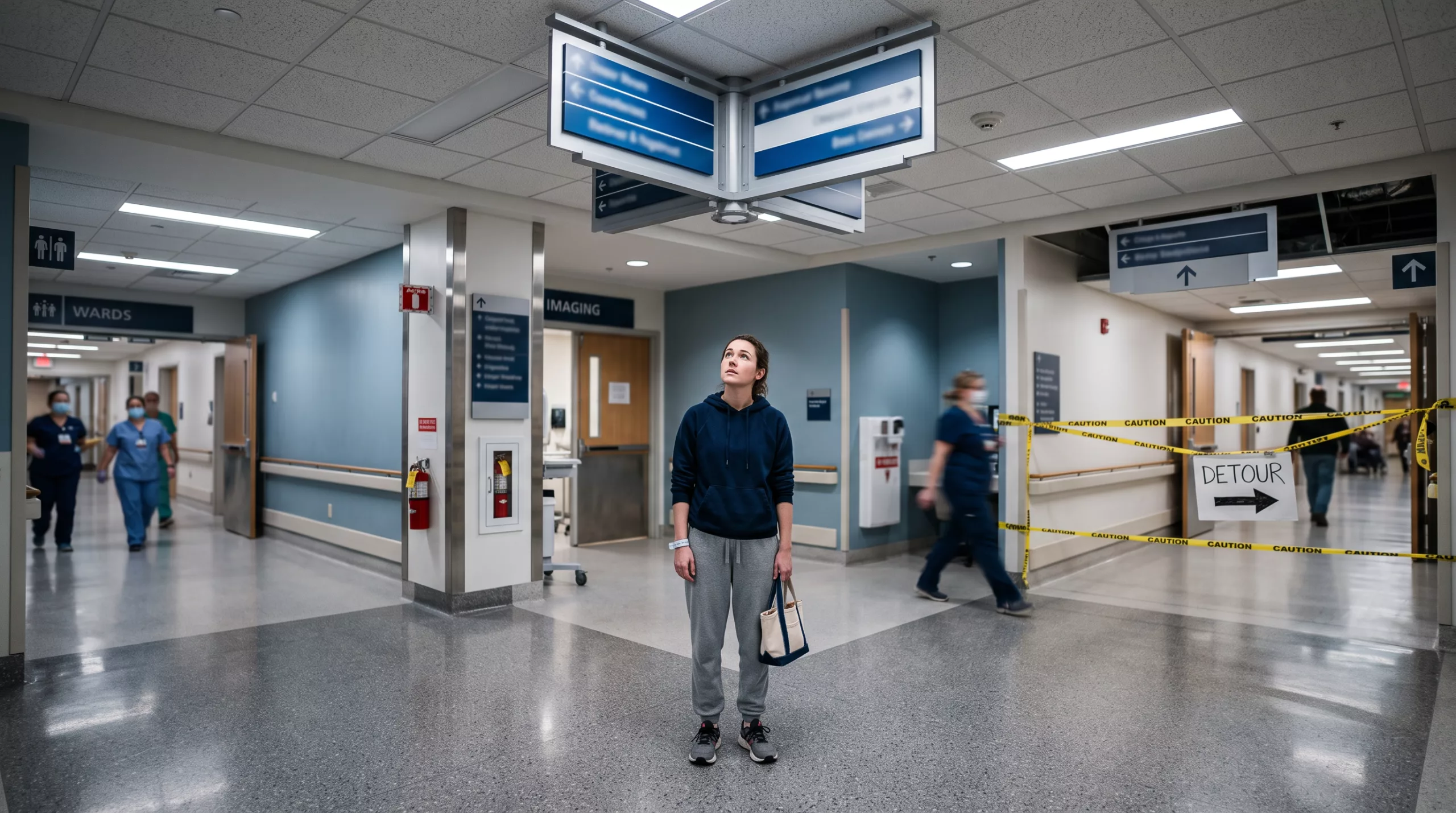

A pattern in patient satisfaction surveys is pointing to a problem most hospitals haven’t fully recognized.
Survey comments about getting lost, missing appointments, and asking staff for directions keep surfacing. Not as isolated complaints, but as a consistent operational signal. Static signage consistently fails to close the gap: even large, well-signed facilities still see the majority of patients turning to staff for navigation help.
What the evidence shows:
The operational and reputational costs here aren’t theoretical. They’re structured, reported, and visible to hospitals, the government, and prospective patients.
The satisfaction-survey comments looked routine until a pattern surfaced: patients circling hallways, arriving late, asking staff who sometimes didn’t know the answer themselves. No single complaint was alarming. Collectively, they pointed at the hospital wayfinding system.
The costs are not abstract. They accumulate in staff time, schedule integrity, satisfaction scores, and institutional trust. This post maps where those costs land and what closes the gap that static signage alone cannot.
Book a Healthcare Wayfinding Assessment
Hospital campuses are genuinely complex: multi-tower builds, basement connector corridors, department relocations during active construction, and elevator banks that serve only certain floors. ICUs, operating theatres, and laboratories are consistently the hardest destinations to find. Static signage degrades the moment a department moves. A digital information hub, often referred to as a digital directory, can push a map revision across every kiosk in minutes.
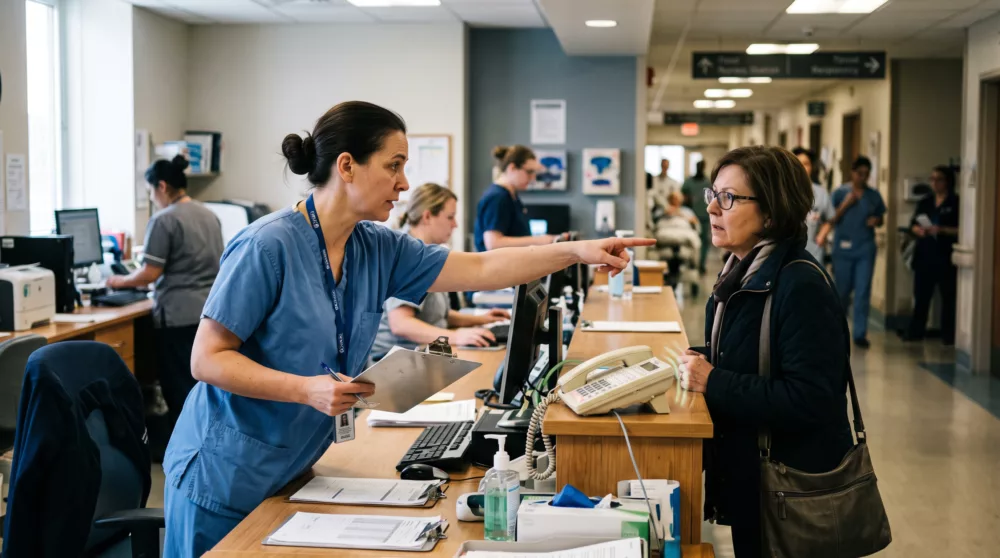
Every wayfinding request intercepted by a nurse or clerk is a clinical or administrative task interrupted. Staff who don’t know the answer themselves, which is common in large academic medical centres where departments shift frequently, escalate the frustration rather than resolve it. The wayfinding load falls on whoever is nearest, regardless of role.
Late arrivals compress scheduling across entire departments. A patient who cannot find the pre-operative assessment unit delays surgical prep, which can push an OR start. OR time is among the most expensive clinical resources a hospital runs. No verified Canadian primary-source figure exists for per-minute OR cost at a national level, so this post does not supply one. The cascade is consistent, though: navigation failure at the lobby propagates downstream into clinical throughput.
The CMS Hospital Data Dictionary identifies HCAHPS as a survey instrument for measuring patients’ perceptions of their hospital experience. That data is reported at the provider level and visible to anyone using Care Compare.
In Canada, CIHI’s CPES-IC calculates seven patient-reported experience measures, including Overall Hospital Experience. CIHI developed this instrument specifically to support hospital accreditation and quality improvement, meaning a frustrated, late-arriving patient who rates their experience poorly feeds structured data that Accreditation Canada reviewers can interrogate. It is not an anecdotal complaint. It is a record.
Static signs meet only part of the problem. Hospitals routinely misapply this distinction to digital kiosks, creating compliance exposure.
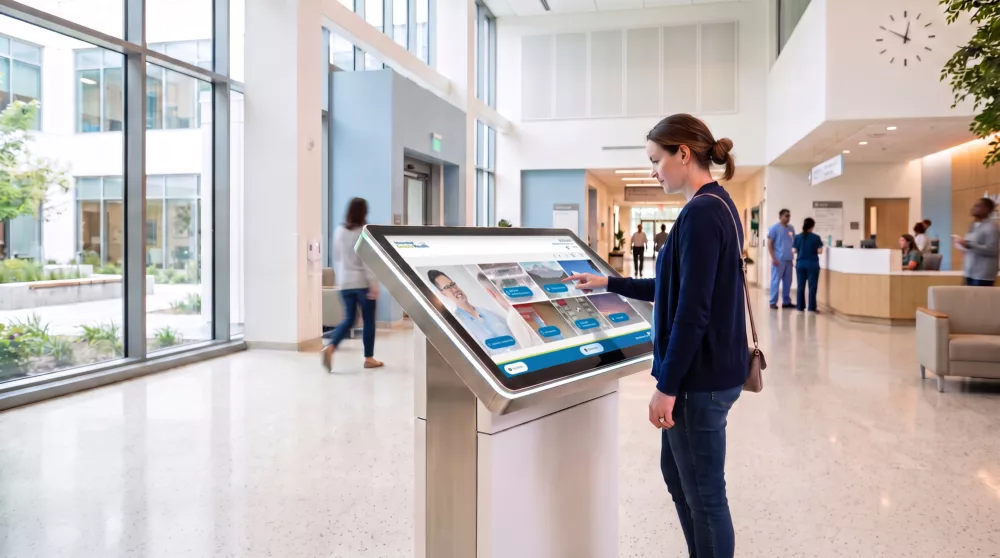
Language is a parallel gap. A digital directory managed through a centralised CMS can serve multilingual content, push accessibility-compliant layouts, and reflect real-time construction detours. Comparatively, none of that is possible with a printed sign after it’s mounted.
Poor wayfinding is a systems problem, not a signage problem. Static signs degrade the moment a department relocates. Your facility team absorbs the gap at the cost of clinical attention. Patient frustration accumulates into satisfaction scores that administrators cannot reverse after the fact.
Interactive wayfinding, real-time, CMS-managed, and multilingual, closes that gap without creating a new IT burden or a parallel help-desk queue. Firstly, for your facility team, that means construction-phase updates pushed system-wide in minutes. For Patient Experience, it means multilingual turn-by-turn guidance before a patient ever reaches reception. For IT, it means a single integrated platform rather than another data silo.
The hidden cost of poor wayfinding compounds quietly. A wayfinding assessment is where that compounding stops.
youRhere offers a no-obligation walkthrough showing exactly how a digital directory would sit in your space: with no quote required to start the conversation.